|
Pharmocology/Adjuncts
|
As part of the overall therapeutic
protocol in the management of patients suffering from
low back pain certain pharmacological and physical
modalities have been found to be of value as adjuncts to
VAX-D therapy.
The routine use of anti-inflammatory medications during
the course of VAX-D treatment has been found to enhance
the success of the procedure. In addition, patients
should be encouraged to wear a pelvic support belt
immediately after a VAX-D session. This precaution adds
to the patient’s comfort level, and acts as a postural
reminder to restrict bending and flexion.
|
|
|
Non Steroidal Anti-Inflammatory
Drugs
It is recommended that each candidate for VAX-D be
prescribed concomitant NSAID therapy. A
therapeutic dosage regimen should be started prior
to the first VAX-D session in order to develop
effective serum levels of anti-inflammatory
activity which will help reduce discomfort from
the initial mobilization of irritated lumbar
structures. The agent should
be
continued throughout the sessions and for
approximately two weeks thereafter.
The rationale for prescribing therapeutic doses of
an NSAID is to provide relief of ass-ociated
localized soft
|
|
| tissue
inflammation and irritation that the patient may
be experiencing and that they may experience
during VAX-D treatment.
It may be important to
select an NSAID agent that also possesses a
significant analgesic component to add to the
comfort of the patient. Two of the newer NSAID's
with selective cyclo-oxygenase-2 inhibition,
namely Rofecoxib (Vioxx) and Celecoxib (Celebrex)
may be more selective than traditional NSAID's and
may have fewer gastrointestinal side effects.
These drugs are not
without side-effects and they should still be used
with caution especially in patients at risk for
peptic ulcer disease.
|
|
|
NSAID's (Recommended) |
|
Generic Name |
Daily Dosage |
|
Rofecoxib (VIOXX) |
25-50 mg |
|
Celecoxib (Celebrex) |
200-400 mg |
|
Naproxen Sodium (Aleve) |
440 to 880 mg |
|
Diclofenac |
75 to 150 mg |
|
Diclofenac & Misprostol (Arthrotec) |
75mg / 200µg |
|
Methylprednisolone- Medrol DosePak
For VAX-D patients in
moderate to severe pain, where chronic
inflammation is a large component, oral steroids
may be utilized for their anti-inflammatory
properties, if there are no contraindications to
their use. The initial dosage of
methylprednisolone may vary from 4 mg to 48 mg per
day
|
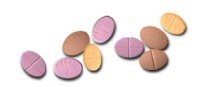 |
depending on the specific disease entity being
treated. It should be noted that dosage
requirements are variable and must be
individualized on the basis of the disease entity
and the response of the patient.
|
|
Mucosal
Protective Agents
Adequate gastrointestinal prophylaxis (using mucosal
protective agents) such as histamine H2 antagonists or
misoprostol (Cytotec 100-200 µg tablets), should be
prescribed for patients who are at risk for peptic ulcer
disease. We recommend NSAID’s (especially COX-I/COX-II
meds) be taken with food or taken concomitantly with
such agents in
|
 |
order
to reduce gastric irritation. The recommended adult oral
dosage of misoprostol is 400 to 800 µg a day in divided
doses. Some NSAID's can be found combined with
misoprostol (eg.) in one tablet. |
|
Analgesics
Occasionally, some analgesia may be desirable to permit
application of effective tensions during treatment.
Patients with low-back pain
usually experience relief of pain on the table and do
not require concomitant analgesia. However, some disc
herniations have an associated inflammatory or soft
tissueirritation and may need analgesia to
|
 |
achieve effective distraction of their lumbar vertebrae,
particularly during the first few sessions. Selection of
an NSAID that possesses significant analgesic activity
may provide sufficient relief without the need for
additional medications. |
|
Muscle
Relaxants
Muscle relaxants are not routinely required during VAX-D
treatment. The use of such agents may be indicated in
cases that tend to develop paravertebral muscle spasms
following a treatment session.
|
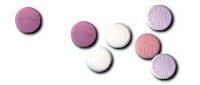 |
If
required, these drugs are only needed for the first few
sessions and should be discontinued as the patient
accommodates to the treatment. |
|
Adjunct Therapy
with VAX-D
Many patients experience relief of
pain and muscle spasm while receiving VAX-D treatment.
However, the stretching of soft tissues and muscles
during a treatment session may elicit some transient
discomfort immediately following the session. For this
reason patients are advised to rise from the table
slowly and carefully with the help of the technician,
and should avoid postural strain or rapid and/or
rotational movements in the immediate post treatment
period. Stressful |
 |
movements have a tendency to elicit muscle spasm and
should be avoided following VAX-D. VAX-D is a
stand-alone treatment protocol. However, each medical
provider must make his/her own professional judgment
regarding the desirability of adjunct therapy. Physical
therapy, manipulation or exercise should not be
undertaken while patients are on a course of VAX-D. |
|
Exercise During
VAX-D
During the period that the patient
is on a daily course of VAX-D, all exercises that result
in flexion or rotation of the lumbar spine should be
avoided as well as activities that require running or
jogging. Any exercise or physical treatments that may
|
 |
increase
intradiscal pressures are contraindicated during the
treatment period. Walking is permitted and should be
encouraged as long as it does not cause discomfort or
muscle spasm.
|
|
Exercise Post
VAX-D
Experience has shown that patients treated with
VAX-D may resume an active lifestyle including sporting
activities and many exercises and/or exercise programs.
 However,
those who have achieved remission from serious lumbar
dysfunctions that involve intervertebral discs such as
herniation and/or degenerative disc disease should
realize that their lumbar structures and tissues need
time to heal. This resolution period requires
approximately one to two months, depending on the
severity of the underlying lesions, before individuals
can safely engage in body contact sports or strenuous
work and recreational activities. However,
those who have achieved remission from serious lumbar
dysfunctions that involve intervertebral discs such as
herniation and/or degenerative disc disease should
realize that their lumbar structures and tissues need
time to heal. This resolution period requires
approximately one to two months, depending on the
severity of the underlying lesions, before individuals
can safely engage in body contact sports or strenuous
work and recreational activities.
In the immediate post treatment period, patients who are
in remission and now able to enjoy pain free daily
living and return to work, sometimes tend to engage in
strenuous activities too soon and can experience a
relapse. It is especially important to advise patients
to allow time for resolution and healing of lumbar
structures and tissues.
Following a course of treatment,
patients in remission should be cautioned to gradually
increase their exercise programs. If their low back pain
has caused them to restrict their activities beforehand
their muscle strength may have suffered and in fact some
have demonstrable muscle debilitation and/or atrophy as
a result of a neurological deficit.
For at least one-month post
treatment exercises that require flexion, extension
and/or rotation of the lumbar spine should be engaged in
cautiously. For example abdominal strengthening sit-ups
should only be carried out with the aid of support
apparatus designed for this purpose.
 |
::Continued::
in
VAX-D and IDD
section of Physicians Forum
|


